Archive for June, 2011

“Knautia macedonia Mars Midget” has a fun name. And it is a very fun plant. If this flower shape looks familiar, you’ll be interested to know this plant is from the “Scabiosa” family. You’ve probably seen its more commonly found cousin “Butterfly Blue” Scabiosa at garden centers everywhere. However, I can’t keep a Butterfly Blue alive for more than two years, whereas I’ve had Mars Midget for 3 years already. This family of flowers, I’ve learned, can be short-lived in hot, humid climates. Which describes a Chicago summer perfectly.

In fact, I thought this plant had perished over the winter, but then it came back. Apparently, there’s also a chance it will self-seed, although I haven’t seen that happen yet. This is an adorable, true-red flower that comes in silly, airy profusion over a neat mound of grayish-green foliage all summer long. They truly do look a bit like flowers from another planet. They like full-sun and are drought-tolerant. I am hoping this one lives a long time. If it doesn’t, I will be tempted to buy a new one anyway, even though it violates my rule against fussy perennials. It’s just that cool of a plant.
Read Full Post »

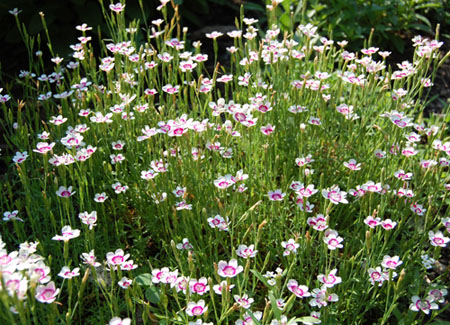
Dianthus, aka Maiden Pinks, aka “Arctic Fire”…I have taken this plant for granted for the past few years because it’s performed so well for so long. What began as a little pot has spread to a clump about 2 feet in diameter. For the first time this year, I’ve tried dividing it, taking little pieces of the shallow-rooted plant to different locations in the garden. So far, so good.  While there are many forms of this flower, this particular variety has thrived throughout the year. It even stays remarkably green in winter. And this time of year, the flowers are truly plentiful and spectacular. It’s not often you find such an easy-case perennial to anchor your flower bed.

Read Full Post »

Lucky Combination

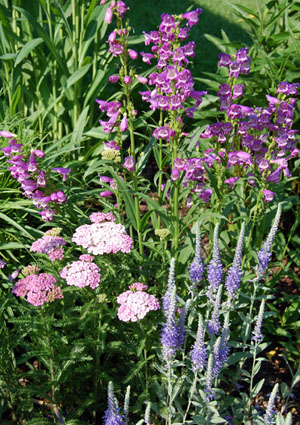
I’d like to say I always plan ahead for good color combinations in the garden. Sometimes, I do. Sometimes, I get lucky, as with these three different purple plants blooming at the same time to form a glorious little combo. Shown in the photo: Penstemon “Prairie Dusk”; Purple Yarrow; and Speedwell (Veronica incana) “Pure Silver.”


Read Full Post »

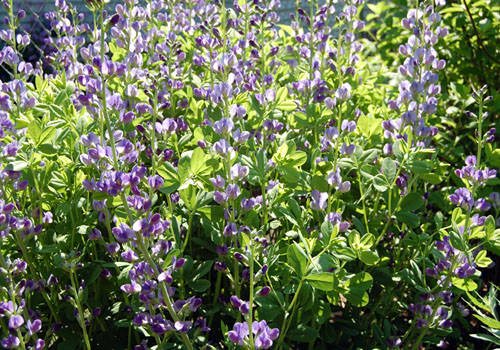
I’ve been a bit remiss on this blog. Summer happens so quickly that this plant’s flowers have been and gone in my yard already. Depending on the weather, this plant will bloom for two to three weeks in late May/early June. It is “Baptisia Australis” otherwise known as Wild or False Indigo. When I purchased this clump shown in the photo, it was in the form of three very tiny seedlings from a mail-order nursery. At that time, about 5 years ago, this plant was hard to find in your local nursery. Today, you’ll see it everywhere, and in more colors, too. (I like the classic indigo color, myself.) My seedlings took three full years to grow to anything worth noting. Then, they really took off…to 3 feet tall and wide! Now you can thankfully buy a much larger plant in the nursery and spare yourself the wait for it to grow.

This plant is a native prairie plant and thus is incredibly strong and resilient to all water conditions. The foliage stays beautiful and upright all season, and in the fall, these really interesting black seedpods form which rattle in the wind. All in all, worth having in the garden, despite the short bloom time. But put it in the back of your beds and give it some room!

Read Full Post »

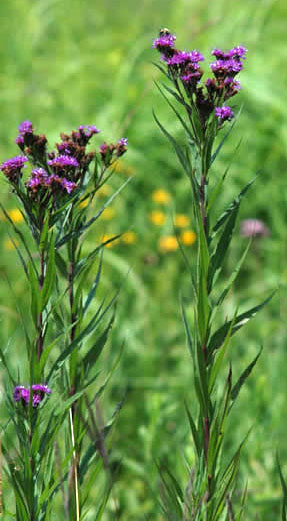
I usually try to use only photos I have taken of my own yard on this blog, but I just purchased this particular plant and I’d like to blog about it before it blooms in about 2 months. The past few years, I have been fascinated by native plants. Fortunately for me, they are showing up more regularly in the stores. You just need to grab them when you see them because supply is very random and sparse. Imagine how pleased I was to see a pot of this plant at a nursery over the weekend. “Vernonia fasciculata”…also called Smooth Ironweed…is a wildflower common to many states, including Illinois, and is a member of the aster family. They grow to be 2 to 4 feet tall and like other asters spread by clumping (so you can share). The flowers are the exciting part. Magenta clusters in late summer that attract bees and butterflies. Exciting! I will be sure to keep you posted on its performance later this summer.

Read Full Post »