Archive for April, 2012

Image

Actually, I don’t know if these are good people. I just saw this house while out for a walk recently. For all I know, these people deserve their landscaping.

You can see why they felt the need for some landscaping in this street-facing side yard of theirs. They have a blindingly white faux-wood picket fence that needed to be softened. They also have very little space between the fence and the sidewalk. So some helpful landscaping company (and it was a professional company…I saw them planting these) came up with the brilliant plan of “arborvitae, daylily, arborvitae, daylily” all the way down this very long stretch of fence.

Now I’m a fan of arborvitaes. I have them along the fence in my backyard. They can provide great cover for an unappealing fence. However, one should never assume the same plants will grow up at the same rate. You never know what flaws may be lurking in the plants or the ground below them. And when you set up landscaping with such a highly visible pattern as in the photo above, you are setting yourself up for a disappointing result if one or more of the plants suddenly becomes stunted or diseased. Not to mention, who had the idea of daylilies here? Not that they aren’t pretty flowers, but let’s face it, they give you flowers for about two weeks in midsummer and then you are left with nothing but spidery messy foliage for the rest of the season. Ugh.

I’m not sure how I would’ve handled this issue. Perhaps I wouldn’t have tried to cover the entire length of the fence, choosing instead a few pockets of landscaping activity. Or perhaps I might’ve gone with a shrub that is nearly indestructible no matter how hard you have to prune it, like honeysuckle. For filler plants, I would’ve chosen catmint. They give you full, reliable foliage and purple flowers ALL summer, not just for two weeks. Arborvitae can be fussy shrubs and all their flaws will be exposed in the arrangement above. I’ll be interested to see how this plan pans out over time.

Read Full Post »

I have stopped gardening for a little while. I trimmed down the winter’s dead foliage, I weeded, I divided, I moved a few plants around.  I’ve been picking and fussing at my beds for weeks. Now it’s time to let things be, just let things be, so the plants can go on their next growth spurt when they’re ready. It’s easy to over-garden in the Spring. At some point, you just need to hang back and let the rain and the sun do their thing. A watched flower doesn’t grow any faster. And beware of digging up weeds that aren’t actually weeds (always a danger when plants are small).

The bleeding heart plant in the photo below is the perfect mascot for the hands-off policy. The key to this plant coming back every year is to plant it in the right spot (semi to full shade) and then not touch it. It usually dies back to the ground by mid-summer, completely disappears, so I have to mark its spot with something so I don’t forget and dig it up next year. And then in the spring, without any interference from me, this happens. Magic, unaided by my meddlesome gardening.

Read Full Post »

It happens at least once a year. Usually early in the season. I am at the garden center for my first big perennial shop and there it is, that flower I have never seen, never heard of before. All I have to go by is its tag and the promise of what is to come. Should I take the chance? Is it a good risk? If it’s under 10 bucks and in my zone or lower, I will usually take that risk. I’d say I’m running at least 75% favorably when it comes to these risks being good ones.

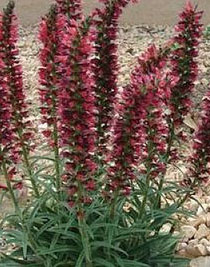
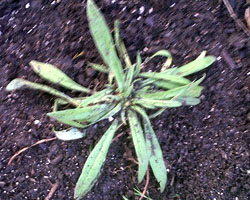
This past week’s risk is Echium amoenum ‘Red Feathers’ or Bugloss. The tag says it ‘forms very low-growing mounds of narrow dark green leathery foliage, with feathery flowering spikes in spring with a multitude of russet-red florets. ‘Red Feathers’ boasts an exceptional long bloom time and plants will rebloom in summer and fall if properly deadheaded. Thrives on neglect!’ Add on to that hardiness down to Zone 3 and this may be a dream plant indeed.

So I bought it. Because even though it currently looks like this:

Image

It is supposed to look like this:

Image

That’s part of the thrill of the hunt. And of gardening in general. Who would think that pathetic little spidery piece of greenery would ever turn into something amazing? But more often than not, it really does. Magic.

The next step of the process of taking in a new plant friend is doing more research online about its history. Mr. Red Feathers here has come quite a long way. This plant is native to northern Iran and the Caucasus Mountains, where it has historically been used for medicinal purposes. The flowers get made into a tea that is supposed to treat anxiety. So if you have some anxious bees in your yard, send them to me.

I am a little amazed to have this plant in my yard with such exotic origins. Will it do well this year? We shall see (and we shall post photos here). The bigger question is will it come back NEXT year? And will I be happy I bought it? At only $6.99, I have to say there are worse risks to take. What can I say. I am an adventurer at heart. A very thrifty adventurer.

Read Full Post »