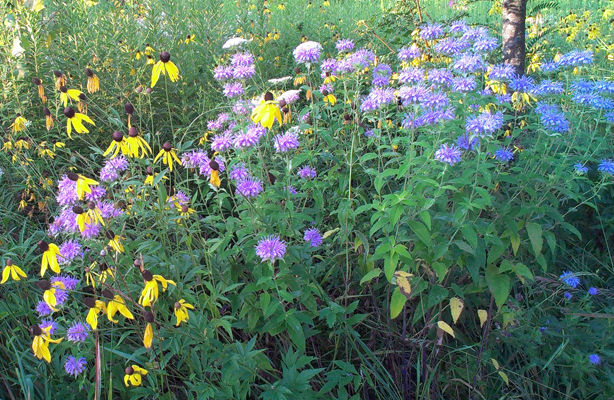
When looking for perennials that will thrive in tough situations (and Chicago weather qualifies for that every season), look no further than your local field, prairie, pond, or wildlife sanctuary. The best perennials for your zone usually have wild relatives thriving in these natural settings. In the photo above, taken at my local pond this week, you can clearly see the black-eyed susans and the bee balm are thriving in gold and purple. They often differ from their tamed and hybridized backyard cousins in one very distinct way…they are much taller. Additionally, you will sometimes notice that the wild versions of our favorite flowers have much smaller or finer flowers. One example of that phenomenon is wild liatris, which is much taller with noticeably more delicate flowers. In the wild, lots of a plant’s energy is spent on growing super long roots for the water and super tall stems to compete for the sun and the pollinators. Huge flowers are not always the end all be all.
 While the hybridized backyard plants offer more variety in color and size, I do think occasionally the perfecting of the growth habit breeds out a little of the hardiness and disease resistance. Backyard bee balm is sometimes more likely to get powdery mildew, for example, than monarda in the wild. Some plants, though, look remarkably similar, whether found in field or garden. One example is Ironweed, which is a relatively new addition to my backyard. As seen in the photo at left, it is about 4 feet of green topped with tiny little fuzzy clumps of remarkably bright purple flowers. Are the flowers worth the wait (it blooms in August) and all that room it takes up? Maybe, maybe not, but I’m still happy to have it because its wildness and impracticality (at least in terms of a traditional garden) amuse me.
A Little Wild
August 15, 2013 by Cait
 Cait's Garden
Leave a comment