Archive for the ‘Uncategorized’ Category

winter

A friend asked me a gardening question yesterday, which got me to thinking that it’s about time I shake off the long winter’s nap and get to thinking more seriously about my yard. After all, it IS the first day of Spring. Unfortunately, with temps in the 20s today, the photo of my yard I snapped this winter is still pretty accurate. Nothing to be done quite yet. My organic corn gluten lawn fertilizer is in the garage. I have a few packets of decorative pole bean seeds in a drawer awaiting warmth. And I will have some mail-order grafted tomato and pepper plants arriving at my doorstep in May. But again, nothing to be done quite yet.

My friend asked me when it was okay to cut down all the leftover stalks and leaves from last year’s perennials. The simple answer is the first nice-enough day in Spring! But from experience, I know the best answer is to be cautious and to wait to do serious clean-up until you start to see green growth at the base of your plant. Ideally, you also wait until the worst danger of snow and freezing weather is past. Sometimes that dried stuff is the only thing protecting your delicate flowers from winter’s chill. Remove it too soon and you can have an unhappy plant that will die before its time. (Trust me on that…there is some lemon thyme that paid the price of my early pruning.)

Overall, though, I am glad to have a typical Chicago Spring, even though it’s colder than I’d like. Last year this time it was in the 80s and my whole garden was going crazy with growth. That lead to an unnaturally accelerated growing season that left me disappointed. So stick around, snow. Everything green will come in good time.
Read Full Post »

Even a passionate gardener can have their faith tested. The drought/early summer combination we experienced in the Midwest this year disrupted my garden to the point which I basically stopped caring by July. Sure, I went through the motions.Tried desperately to keep everything alive in the absence of rain. Enjoyed the few minor successes I had. Turned a blind eye to the patch of blight and shattered dreams that was my vegetable garden.

I did learn a few things this summer. “Drought-tolerant” is not the same as “desert.” Overall, my garden is built to handle your average Midwest dry spells. It is not ready to be Arizona. And I still maintain that plants know the difference between sprinklers and natural rain. You can keep them alive, but they just aren’t as happy.

I learned that coneflowers aren’t as wonderful when they are done blooming by early July (instead of starting to bloom by then). You just have to look at dried seedheads for the rest of the summer. The goldfinches were happy, but I wasn’t.

I also learned that there is not enough water in the world to make Annabelle Hydrangeas happy in a drought. Well, a least not that I am willing to provide. If I have to water something that’s planted in the ground more than once or twice a week, I feel burdened by the plant.

And finally, I learned that when I feel blue about my garden, I do not post on my blog. Just as well. You would not have enjoyed hearing me whine for the past three months. You might already have clicked off!

There are some successes to report. Plants that impressed me with their power to laugh in the face of drought and heat. Ornamental Oregano“Kent Beauty” (see last post) was just as fresh and lovely as ever. My two Blue Mist/Caryopteris shrubs, perhaps because they originate from the South, ignored the early arriving summer and just progressed through the season as usual, blooming in late summer and looking fabulous. Sedum, whether it’s tall or a groundcover, is a godsend. I vow to plant more next year. Sometimes, they were the only plants that didn’t look parched. For annuals, my Alyssum (from seed planted a few years ago) continued to bloom all summer.  And while the petunias got gangly, I am impressed they continued to live in my planter on the patio all season. But my favorite most beloved plant this year was my Red Valerian plant (Centranthus ruber “Pretty Betsy). It’s lovely cool green leaves have resisted disease, drought, insects, everything, and it keeps producing rounds of red flowers all summer, from way back in May till now. When I find another one of these in the store next year (it’s still hard to find and it is not the sort of plant you can divide), I am snatching it up. You must build your team (or your garden) out of winners if you want to make it through a tough season. 

Read Full Post »

A Delicate Beauty

When I saw this in the garden center a few years ago, I had to have it. It is an ornamental oregano (origanum rotundifolium) called “Kent Beauty.” Only after I planted it did I read more about the plant and find that while it is technically hardy to Zone 5, it can be fussy about overwatering, high humidity, and cold winters. All of which are a risk in my area. I thought perhaps it wouldn’t survive past one season. But it’s been three seasons now and the plant is thriving. In this photo it is in full flower. The flowers develop as pink “leaves” on the stems. The plant is lovely just as foliage, but the flowers are phenomenal. It’s definitely worth trying this plant in your garden, even if you have to experiment with location. Sometimes it is sold in fancy pots in garden center hot houses, but trust me, it’s tougher than it looks despite its delicacy.

Read Full Post »

I haven’t been posting to this blog at my usual rate this year. That is because a season’s worth of blooms are whooshing by in the blink of an eye, giving me scant opportunity to enjoy the usual parade of blooms in my summer garden. I admit to finding this phenomenon alarming. Thanks to the record warmth of the winter and spring and an official drought in Illinois, my late June garden is looking like mid-August. In the panoramic shot below you can see the bizarre results. We have coneflowers, lilies, balloon flowers, and bee balm already blooming. The Joe Pye Weed and the liatris are on the cusp of blooming (unheard of in June), and the butterfly bush has had flowers for weeks already. The vegetable garden hidden behind these flowers is growing slightly behind its usual rate, having been planted only a month ago and not enjoying the drought and the heat. It makes me wonder what will happen in August. Will most of the flowers be spent? Will they rebloom? Will my garden look like a battle zone? Only time will tell.

Read Full Post »

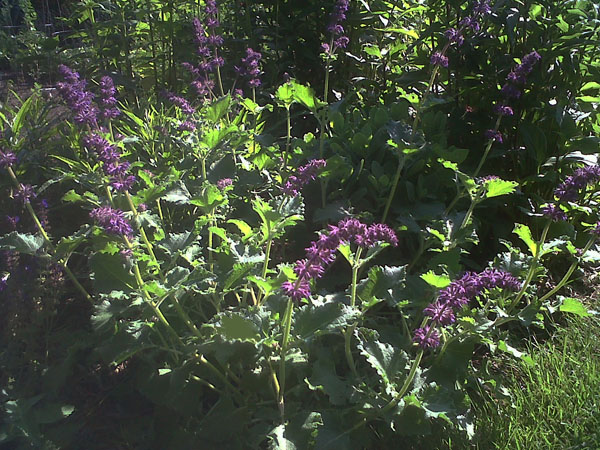
It is unusual to find a plant in the store once and then never again. By the time they make it to the store, they are usually field-tested and approved and they tend to stick around. Yet oddities do occur. Such as “Purple Rain” Salvia. I bought it about 6 years ago after seeing it on a nursery shelf and have never seen it again. If you Google it, you’ll find mention of it, but no one selling it. Why not? I have no idea! This has been an awesome plant. Reliable, gorgeous, resistant to disease and bugs, cool curly leaves, and long-lasting flowers. Did Prince have an issue with the name? (If there were a plant detectives TV show, I’d put them on the case.) I’d try to make more through division but it’s not really a plant that seems conducive to dividing, and to be honest, I hesitate to take a sharp spade to it when it might be one of the only Purple Rain Salvias in the world. And so it remains, an enigma in my yard. Just goes to show you that you should never pass up that unusual variety that catches your eye because you might just blink and miss it.

Read Full Post »

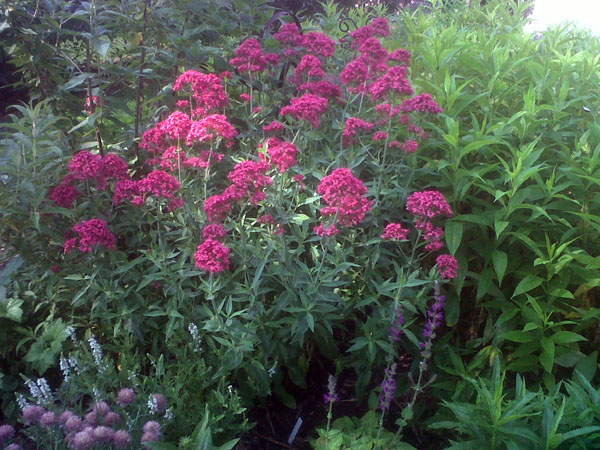
I bragged on Centranthus ruber ‘Pretty Betsy’  a couple years back, but this plant reminds me every year how fabulous it is. I really can’t understand why it is so difficult to find this in the store. It should be sold everywhere along with coneflowers and tall phlox.  I got mine years ago through mail order, although I have seen it once or twice since in the stores. The particulars: Hardy to Zone 4, 3 feet tall and wide, lovely branching form with bluish-green oblong leaves, cherry red flowers from May through August (which are more plentiful if you deadhead regularly), good for cut flowers. It is supposed to spread by seed, but I haven’t been that lucky yet. As you can see, it is blooming now. About the only thing it doesn’t have is scent. And the bees don’t like it for some reason. (Perhaps it makes them sleepy?) But overall, wow, one of the most reliable, knockout gorgeous plants I own.

Read Full Post »

Plants by Mail

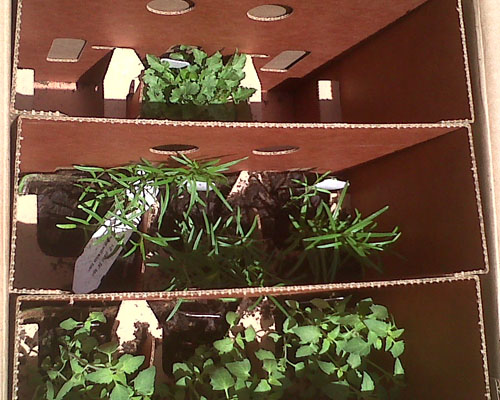
I have had quite a few experiences over the years with mail-order plants. Some of them started out rough. Shipping can take its toll on tiny seedlings. A few plants have arrived looking sad and broken and died shortly after arrival. On the plus side, all the companies I’ve ordered from have sent me replacement plants if needed (sometimes those died, too, but I appreciate the effort). I try not to order often through mail-order because so many varieties of plants can now be found in local stores. However, I do usually indulge in one small box per year when I see unusual plants. My favorite vendor is Bluestone Perennials because they get better at packing every year. They’ve gone from biodegradable peanuts in the box to this truly innovative system of using cardboard restraints to keep the plants in place while letting them breathe. As you can see from the photo, these pots aren’t going anywhere. Plus this year, the plants ship in biodegradable pots made from coconut husk fibers (coir) . This not only allows the little seedling to “breathe” better, but you plant the whole pot! This reduces stress to the roots of the plant and gives it some compost, too. Excellent plan. I’m excited to see how it works.


Read Full Post »

Image

At a time when traditional lilacs have finished blooming, the Dwarf Korean Lilacs are just beginning to bloom, making them a great way for lilac lovers to extend their season of happiness. As you can see from the photo, the fullness and compact size of the shrubs (the ones shown are at full height and are actually three shrubs grown in close proximity) make them a perfect addition to landscaping near the house. To keep them tidy, just be sure to shear back up to a foot each year (depending on the height you want to maintain) after they bloom. Another great thing about this shrub is that the flowers are everywhere, from top to bottom. And they are reliably that way year after year. Simply awesome blossom coverage. And their smell is particularly sweet, their petals particularly dainty. If you want a low maintenance, reliably flowering shrub, you really can’t go wrong with this one.

Read Full Post »

Image

Actually, I don’t know if these are good people. I just saw this house while out for a walk recently. For all I know, these people deserve their landscaping.

You can see why they felt the need for some landscaping in this street-facing side yard of theirs. They have a blindingly white faux-wood picket fence that needed to be softened. They also have very little space between the fence and the sidewalk. So some helpful landscaping company (and it was a professional company…I saw them planting these) came up with the brilliant plan of “arborvitae, daylily, arborvitae, daylily” all the way down this very long stretch of fence.

Now I’m a fan of arborvitaes. I have them along the fence in my backyard. They can provide great cover for an unappealing fence. However, one should never assume the same plants will grow up at the same rate. You never know what flaws may be lurking in the plants or the ground below them. And when you set up landscaping with such a highly visible pattern as in the photo above, you are setting yourself up for a disappointing result if one or more of the plants suddenly becomes stunted or diseased. Not to mention, who had the idea of daylilies here? Not that they aren’t pretty flowers, but let’s face it, they give you flowers for about two weeks in midsummer and then you are left with nothing but spidery messy foliage for the rest of the season. Ugh.

I’m not sure how I would’ve handled this issue. Perhaps I wouldn’t have tried to cover the entire length of the fence, choosing instead a few pockets of landscaping activity. Or perhaps I might’ve gone with a shrub that is nearly indestructible no matter how hard you have to prune it, like honeysuckle. For filler plants, I would’ve chosen catmint. They give you full, reliable foliage and purple flowers ALL summer, not just for two weeks. Arborvitae can be fussy shrubs and all their flaws will be exposed in the arrangement above. I’ll be interested to see how this plan pans out over time.

Read Full Post »

I have stopped gardening for a little while. I trimmed down the winter’s dead foliage, I weeded, I divided, I moved a few plants around.  I’ve been picking and fussing at my beds for weeks. Now it’s time to let things be, just let things be, so the plants can go on their next growth spurt when they’re ready. It’s easy to over-garden in the Spring. At some point, you just need to hang back and let the rain and the sun do their thing. A watched flower doesn’t grow any faster. And beware of digging up weeds that aren’t actually weeds (always a danger when plants are small).

The bleeding heart plant in the photo below is the perfect mascot for the hands-off policy. The key to this plant coming back every year is to plant it in the right spot (semi to full shade) and then not touch it. It usually dies back to the ground by mid-summer, completely disappears, so I have to mark its spot with something so I don’t forget and dig it up next year. And then in the spring, without any interference from me, this happens. Magic, unaided by my meddlesome gardening.

Read Full Post »

« Newer Posts - Older Posts »