Archive for the ‘Uncategorized’ Category

It happens at least once a year. Usually early in the season. I am at the garden center for my first big perennial shop and there it is, that flower I have never seen, never heard of before. All I have to go by is its tag and the promise of what is to come. Should I take the chance? Is it a good risk? If it’s under 10 bucks and in my zone or lower, I will usually take that risk. I’d say I’m running at least 75% favorably when it comes to these risks being good ones.

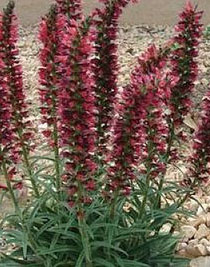
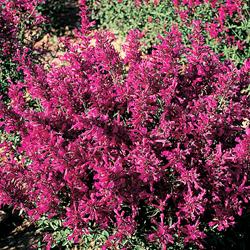
This past week’s risk is Echium amoenum ‘Red Feathers’ or Bugloss. The tag says it ‘forms very low-growing mounds of narrow dark green leathery foliage, with feathery flowering spikes in spring with a multitude of russet-red florets. ‘Red Feathers’ boasts an exceptional long bloom time and plants will rebloom in summer and fall if properly deadheaded. Thrives on neglect!’ Add on to that hardiness down to Zone 3 and this may be a dream plant indeed.

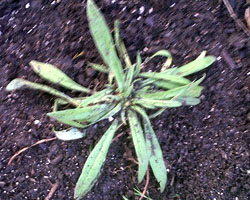
So I bought it. Because even though it currently looks like this:
Image

It is supposed to look like this:

Image

That’s part of the thrill of the hunt. And of gardening in general. Who would think that pathetic little spidery piece of greenery would ever turn into something amazing? But more often than not, it really does. Magic.

The next step of the process of taking in a new plant friend is doing more research online about its history. Mr. Red Feathers here has come quite a long way. This plant is native to northern Iran and the Caucasus Mountains, where it has historically been used for medicinal purposes. The flowers get made into a tea that is supposed to treat anxiety. So if you have some anxious bees in your yard, send them to me.

I am a little amazed to have this plant in my yard with such exotic origins. Will it do well this year? We shall see (and we shall post photos here). The bigger question is will it come back NEXT year? And will I be happy I bought it? At only $6.99, I have to say there are worse risks to take. What can I say. I am an adventurer at heart. A very thrifty adventurer.
Read Full Post »

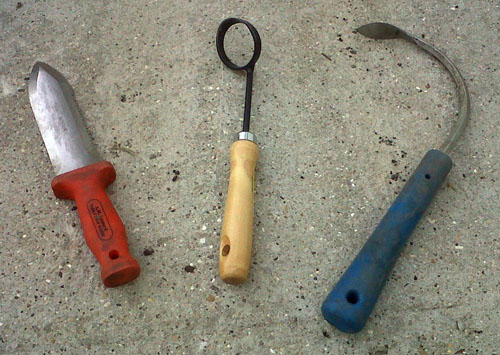
Way back when I started this post, I talked about “tools of the trade.” I think this advice bears repeating. There are three weeding/cultivating tools in my gardener’s arsenal that continue to prove invaluable year after year. They are: the Garden Knife, the Circle Hoe, and the Cobrahead. These three products have saved me many hours of weeding time over the years. They work shockingly well. Let me break them down for you.

The Garden Knife [left] is super-strong with a serrated edge (and its own holster!). This is a great tool for slicing out deep weed roots in tricky, narrow places. Such as when you need to get invasive grass out from within and around a patch of valuable perennial. It’s kind of like a surgical tool, precise and targeted. You can also use it to slice out small plants for transplant or to dig holes for bulbs.

The Cobrahead [right] is awesome for big, obnoxious weeds with long roots like dandelions and thistle weed. It’s especially good for spot lawn weeding. The head has a very sharp blade and it’s shape really digs under the ground to pop out the weeds quickly and completely in one swoop.

My favorite by far, though, is the Circle Hoe [center]. The one in the photo is the smallest size, good for precise weeding around delicate flowers. I also have a medium-size handle version for a longer reach and my favorite, a long-handled version that lets me weed/cultivate while standing and that easily handles deeply rooted weeds, too. You can purchase them as a set. The bottom of the circle is a sharp blade that cut through the weeds/dirt, which then pass through the opening in the circle.  You can slice through the hardest ground and the toughest weeds like butter. I let my new neighbor try it last summer and he was amazed. Seriously, if you buy just one kind of new tool, make it the Circle Hoe (the whole set if you can). It’ll rock your world.

Read Full Post »

Happy 100th Post!

Well, this IS a big deal for me. My 100th post to this little blog in less than two years. If I lived in a place with warm winters, who knows how many posts I’d have by now. Of  course, with the warm winter and spring we’ve had, who knows what the future holds.

Speaking of said warm spring, after two weeks in the upper 70s and lower 80s, all the growing things are out of whack. The crocuses, daffodils, forsythia, and magnolia trees are all blooming now, at the same time. The latter three should not be blooming till April, April, and May, respectively. My lilac bushes are nearing bloom, as well as my viburnum and hyacinths. In March. I can’t even imagine what’s going to happen in April and May. All our gardening expectations have been thrown out the window. We are the New South.

One consequence of the warm winter is a plethora of grass in my flower beds. There is always some that creeps in and must be pulled out every spring, but this has reached epic proportions. I have been wielding my garden knife quite heavily in recent days trying to find the little perennials under the large tufts of invasive grass.

A more positive (yet still slightly alarming) consequence of the warm weather is that plants that spread have spread to an unprecedented level over the winter. For example,  I have enough bee balm to populate several gardens now. I will be looking for good homes for a few clumps this spring.

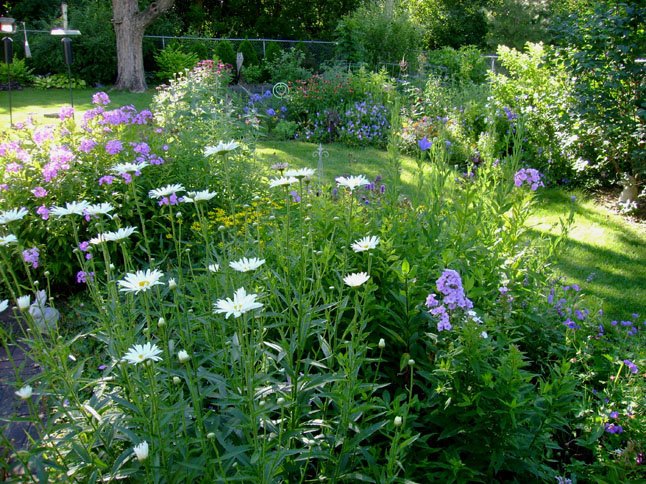
No one looking at my flower beds now would ever expect them to look like the photo below. It’s pretty much a shorn wasteland at present, with little green tufts at ground level. If you want to convince someone to become a gardener, I wouldn’t let them see your garden right now. You’ll scare them off. Every spring I am amazed at how things grow in the space of a few weeks. Although this year, I wonder if I’ll have coneflowers in May instead of July!

Read Full Post »

“IT’S A SPREADER,” I screamed into the March wind yesterday, much like a spotter on the boat in Moby Dick. Every now and then, a plant surprises me. One way it can do so is by unexpectedly spreading to three times its size and encroaching on other nearby plants, all in the space of one dormant season. Plants that spread can be a good thing. Sure, we all have more Shasta Daisies and Black-eyed Susans than we’ll ever need, but it’s generally great to have plants that make more of themselves, as long as the spread is slow and easily controlled. Some plants spread by seed, and these, while they can be annoying, are usually easily pulled out where they are unwanted. More often, plants spread via the root system, like Shastas. But there are roots and there are ROOTS. I once planted something called a Mexican primrose that I found out, two weeks after I planted it, can be an aggressive spreader. So aggressive, it was recommended it be planted in a pot. Yikes. A little exploratory digging had shown it had sent out root runners (aka “rhizomes”) a good two feet out from the main part of the plant below ground. YIKES! I dug that puppy out of the ground pronto and threw it away. I did not need that much primrose.

I’ve learned to respect and sometimes fear the term “spreads by rhizomes.” When I see a plant with that tag, I make sure I do some research to see how aggressive it is. It’s not necessarily a bad thing. Many plants that spread by rhizomes are gentle and slow in their growth. Non-invasive.

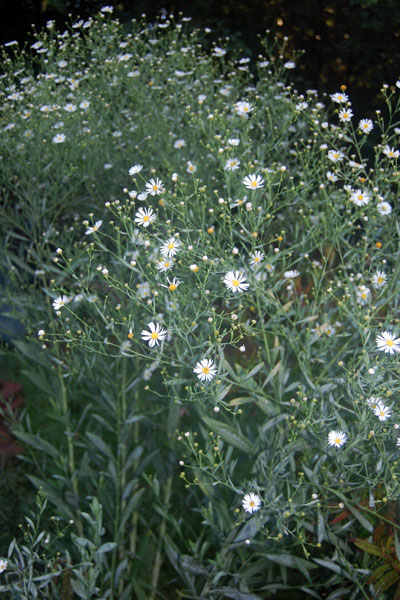
So, back to my expression of horror/surprise yesterday. My fairly new “Boltonia asteroides” (an American wildflower also called Wild Aster…see photo) is about two years old. I knew it was a quick grower because at one year old, I was able to give an extra clump bigger than I originally purchased to my mom. But when I looked yesterday, there was a huge field of new green leaves popping up from the ground around it. Way more than I needed in that spot. I feared I had planted a monster. Then reason prevailed and I fetched my handy Cobrahead tool and started digging. The roots under each leaf clump were very robust (looked kind of like a pale miniature octopus), but they were thankfully only about 3 inches long and in a compact bundle. Easy to remove from areas where it was encroaching on other plants. Whew. Glad I found that out before those little bundles got entrenched. (Wildflowers definitely know how to entrench.)

I’m not about to dig up this gorgeous plant, which is a favorite of mine. But now I know to watch it carefully. VERY carefully. And by the way, if you want some, you know who to call.

Read Full Post »

Those of us in Zone 5 are experiencing a freakishly warm winter. I didn’t realize how freakish until yesterday, when I was poking around my garden and noticed my buddleias have leaves on them. If you do not have buddleias, aka butterfly bushes, in your yard, you will not know why my mind is blown by this occurrence. Suffice it to say that buddleias are temperamental in our zone. They are a Southern plant, essentially. I managed to kill three of them (or rather, they committed suicide) before I got my current buddleias flourishing. (More tips about how to do that later.)

The reason these leaves are so astonishing is that it’s the beginning of March in Zone 5, and buddleias don’t leaf out in Zone 5 until sometime in late Spring, like May. Buddleias bloom on new and old wood. In the South, where the winters are far warmer, the plants never really die back, so they definitely get blooms on old and new wood. Here, we always get full die back due to the cold, so all our growth comes from new wood every Spring. It’s always a bit tense until I see the first little leaves at the base of the plant every Spring.

However, my buddleias at present have not only a lot of new growth at the base, but new leaves going rather far up on the old wood. Unheard of! While this is exciting, I do worry that in typical Chicago fashion, we will get some nasty frosts and the new leaves will suffer. Fortunately, the base of the plant is still protected by leaves and brush and will hopefully continue to thrive.

Buddleias are very slow to start in the Spring, so you should never plan for them to be the focal point in your late Spring/early Summer garden. And I mentioned they are temperamental. I’ve found they do best in a spot in the garden that gets some protection from winter winds. For me, this means surrounding them with other tall and bushy plants that afford some extra coverage to the area in winter through their dried foliage. Also, there are two ways to buy buddleias. The first is as a large shrub in the shrub section of the nursery. This can set you back $30 to $50 for a pretty much full size bush. The three I lost were all purchased that way. The other way to buy them is as a perennial flower in the flower section of the nursery. That’ll set you back maybe $10. It’s a much smaller plant, but they grow quickly. You’ll have a full-size shrub in two to three years. And they seem to do much better when they are grown in the yard from a small plant. I think they just adapt better to the conditions. It’s worked for mine so far. They’ve each come back for several years now.

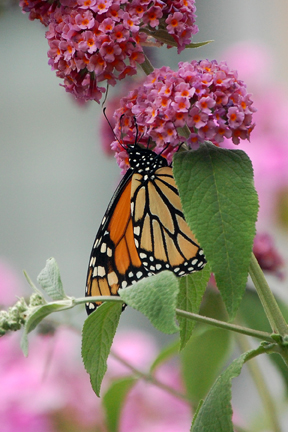
As the photo above illustrates, butterfly bushes live up to their name. They do attract butterflies like nothing else in the yard. And their tall and sprawling habitat add a bit of softness and whimsy to the garden. There are many colors to choose from, all shades of white, pink, and purple. The plant shown above is a “bi-color” buddleia. Much harder to find, but a gorgeous pink/yellow combination with an extra sweet vanilla smell. There are even miniature versions of buddleias now (like Blue Chip) that only grow a foot tall (instead of 3 to 4 feet). I have one and it’s nice, but it doesn’t really seem like a buddleia due to it being a neat, compact little clump. I miss the crazy sprawl of traditional buddleia and truth be told, I don’t think butterflies like to land that close to the ground. My advice is, make room for at least one old-fashioned buddleia. Who knows… If global warming is real, perhaps we are becoming the new South!

Read Full Post »

Poised and Ready

Well, fellow gardeners, it may seem that I’ve taken a long time off from this blog, but I assure you, I haven’t stopped thinking about gardening. Right after the holidays, the traditional “reading of the garden catalogs” began in earnest. I try not to purchase many plants from catalogs because the plants are just so small it can take forever for them to amount to anything. Plus, now you can eventually find most plants in a garden center if you look often enough. Still, these catalog plants are so incredibly tempting! I usually flag dozens of pages, and then taper my choices down to a handful of must-haves. This year, there were two must-haves for me from Bluestone Perennials, a company I’ve had good luck purchasing from in past years.

Horsetail

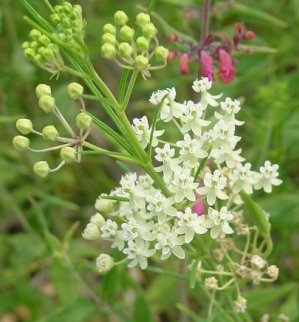
The first is Asclepias Verticillata, a member of the milkweed family and a prairie native plant also called “Horsetail” because the whorled leaves are supposed to resemble a horse’s tail. I have many gorgeous aslepias plants in my yard in an attempt to coerce monarch butterflies into hanging around, so I could not pass up this rare white version.

The next plant I couldn’t pass up was “Agastache cana Purple Pygmy” (in the hyssop or hummingbird mint family). I have only recently added an agastache to my garden (Golden Jubiliee) and based on that success, I decided to try this one. This plant is a miniature version that stays low to the ground and is supposed to be covered in purple flowers all season. We shall see.

In just two weeks, I will be heading to my local nursery for the annual buying of the pansy flats. Then there will be a slight shopping drought until May when the first waves of perennials start rolling in. In between, there will be many happy days cleaning up the yard in the crisp Spring air.

Read Full Post »

We are only a breath away from the Winter Solstice. Despite it being the first day of winter, I have come to see it as the turning point to better, warmer days. As in days of old, I imagine that light staying around longer every day and I look forward to Spring as a child looks forward to Christmas morning.

A perennial garden is a beautiful promise of renewal and rebirth. I know my old friends are just sleeping, waiting to burst into color again. I look forward eagerly to acquiring some new friends. And I thank the flower companies for sending me catalogs to dream by this winter.

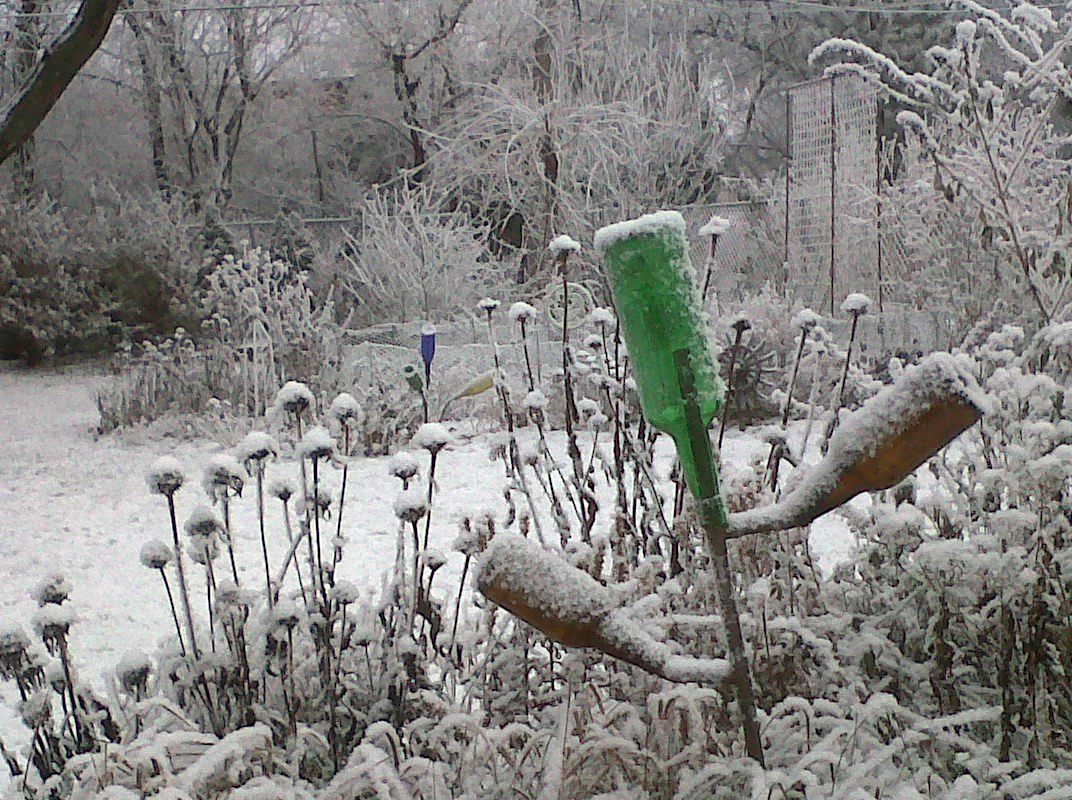
In the meantime, I would be remiss not to try to enjoy the beauty that winter sometimes brings us, such as in the photo above, where frost recently transformed my garden into a fairy kingdom for a few hours. I am glad we decided to keep the bottle trees out for the winter, as their color is a welcome echo of the flowers gone and soon to come back.

I wish all my fellow gardeners a joyous holiday season and new year! May the solstice find you dreaming happy dreams of flowers and vegetables to come. Being a gardener means always having something wonderful to look forward to.

Read Full Post »

This is a follow-up to yesterday’s post about plants with colorful fall foliage. I can’t claim the lovely front yard in the photo…it belongs to my mother…but I simply had to share how great this looks. This photo was taken today and just look at the color! And almost all of it is from shrubbery, like spirea, ninebark, viburnum, and even miniature weigela. A few perennials (sedum, tall and short) and some amazingly tough annuals (alyssum) add to the mix. I was really knocked out to see the show of color. This is some seriously good landscaping!

Read Full Post »

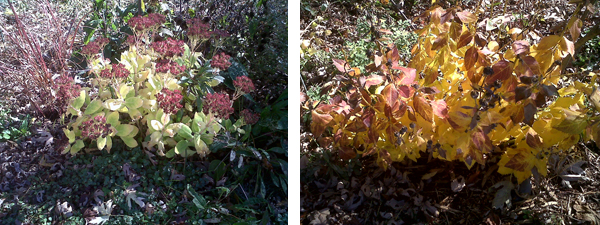
Having had a fairly lucky gardening year, I would be remiss not to post to this blog on the special date of 11-11-11. Happy Numerological Oddity Day! Well, frost has finally come to my garden, but still not as hard as it has in past Novembers. I have a few splashes of purple mums, hardy geraniums, and even alyssum still fighting the good fight. I wanted to make mention of some flowers that pull double-season duty by putting on a good show of colored foliage in the fall. On the left is a sedum called “Neon” which appropriately has foliage that glows this time of year. On the right is a balloon flower. Balloon flowers, in addition to being long blooming in the summer, put on quite the show of colors in the fall. So you will find me both looking up at the trees and looking down at my plants this month as I try to soak it all in. May this day bring good luck to all my faithful blog readers and gardening friends!

Read Full Post »

Annuals that Last

I fully own up to having little patience with annuals in pots. The extra care they need to look good all season confounds me. I have had better luck with adding annuals into my perennial beds. These two have definitely given me a return on my investment: Ageratum (the blue one) and Lantana (the hot-colored one). Here it is, late October, and they are just about the only flower game left in town, as this lone Monarch attests to. (I seriously hope that lone Monarch heads for Mexico soon.) I will definitely be purchasing these two annuals again next year, especially more Ageratum. That little blue plant never quite blooming all year, whereas the Lantana had to “re-load” periodically. Both plants can be a little tricky to find, though, so buy them early in the season to make sure you find them at all.

And with that post, I might have just made my last bloom-related post of the season! I’d be sadder about it, but the fact that I’m making it this late in October is a good thing. We had a good year, didn’t we?

Read Full Post »

« Newer Posts - Older Posts »