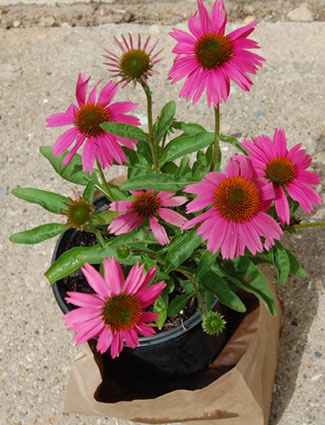
 See, it was like this. I was minding my own business while visiting a garden center with a friend when this little charming orphan plant thrust itself into my line of sight. AND there was a 30% off plant sale. I was powerless to resist! I know it’s late summer and I really shouldn’t be adding more plants at this point in the season. However, I’d like to meet the gardener that can look “Sombrero Hot Pink” Dwarf Echinacea in the eye…er, petals…and say ‘no!’ Did I mention it’s a brand new cultivar? You had me at ‘echinacea’…
Posted in Uncategorized | 1 Comment »
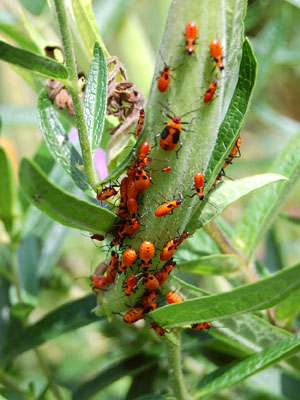 Lovely photo, huh? These colorful orange and black bugs, I recently discovered, are called milkweed bugs. And what do they eat exclusively? Plants in the milkweed family. And that means my butterfly weed has its very own bug. I bought my butterfly weed for the gorgeous orange flowers and for the fact that it attracts butterflies and feeds monarch butterfly caterpillars. The giant family of milkweed bugs now feeding on the seed pods was a surprise. Apparently, they don’t damage the plant. They just control the spreading of the seeds. Nature’s little control against excessively spreading milkweeds.
August is the buggiest month of the gardening season. Not only are the mosquitoes eating us alive, we have to deal with angry wasps, giant grasshoppers, hungry Japanese beetles, and all kinds of unexpected new bits of grossness like the milkweed bug. A few times I’ve even come across a praying mantis. (That is one scary bug, especially when it tilts its head to look at you.) I try to appreciate all facets of nature. I really do. And I can get behind a lot of bugs in terms of appreciation for their usefulness to the ecosystem. I’ve even come to terms with those hairy brown ground spiders that run away from you when you garden. I’m arachnophobic, big time, but as long as the spider is running AWAY from me, I can deal. And I made my peace long ago with the slimy but beneficial worm (you can’t garden if you don’t learn to appreciate worms). But the major convergence of all bugs in August has me staying indoors as much as possible and leaving my garden to fend for itself. Otherwise, the amount of screaming I do when a huge grasshopper lands on me tends to spook the neighbors.
The one good thing about the excessive amount of creepy crawlies in August? It gives me a reason to look forward to the first frost!
Posted in Uncategorized | Leave a Comment »
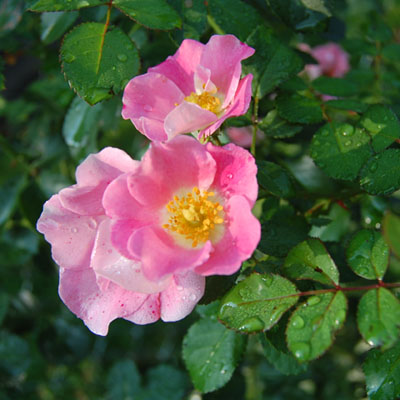 This is a delightful rose bush that has become a favorite of mine. Like most shrub roses, Carefree Delight is resistant to all the nasty diseases old-fashioned roses can get, like black spot. The only issue I’ve ever had is the occasional Japanese beetle. This shrub gets 3 to 5 feet tall and wide, but can be trimmed to maintain size and shape. It flowers non-stop all summer long. And just look how gorgeous these delicate pink flowers are!
Posted in Uncategorized | Leave a Comment »
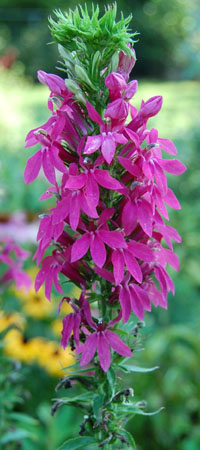 Lobelia is a new plant for me. I just added it to my garden this summer and so far, I am thrilled. This particular variety is called “Monet Moment” and gives these gorgeous, upstanding, hot pink flower heads in August and September. I am not sure yet if the flowers will last that long as I purchased this plant in late July and it was already blooming. But no doubt it is standing up to the heat and humidity and attracting some hummingbird interest. Lobelia has been a known herb for hundreds of years. Native Americans reportedly used it to treat respiratory conditions. However, varieties like the one I have are bred for beauty in the garden, not medicinal uses (although I understand it is poisonous if ingested). This plant grows about 20 inches high and likes moist soil, although average soil is fine, too. If this performs well again next year, you can bet I am going to add more of these plants to my yard for some much needed pink color in late summer.
Posted in Uncategorized | Leave a Comment »
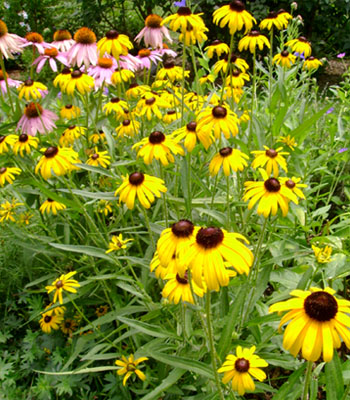 Who doesn’t have this flower? (You don’t? Wait…I’ll give you a clump.) If you are like me, you’ve never actually had to purchase this plant. You’ve instead received it from a friend or neighbor who has plenty to spare. I started with a donated clump about 7 years ago and now have huge clumps everywhere and have given many more away. It’s the plant that keeps on giving! And why not give it, it’s fabulous. Especially now, in August, when the yard sorely needs flowers. Plus, it’s easy to grow and a native plant, too!
Posted in Uncategorized | Leave a Comment »
 Okay, I’m cheating again. This isn’t actually a flower either. It’s another shrub! Rose of Sharon is a classic shrub. It can look like a small tree. I keep mine trimmed to be full bushes around 5 feet high. This particular variety is called Aphrodite and you can see why…huge two-toned pink flowers are showstoppers. They look quite exotic for a hardy perennial shrub in Illinois. Indeed, Rose of Sharons are part of the dramatic hibiscus family – except they can handle our winters. Just give them full sun and a lot of space and July through frost, you will enjoy an amazing show.
Posted in Uncategorized | Leave a Comment »
I’m starting a new series of posts today. I call it “Summer-Proof Flowers”…because there’s nothing as hard on a garden as summer at its height. That might seem a weird thing to say, but the intense heat, and the bouncing between droughts and flooding that is common in a Chicagoland summer, is just too intense for faint-of-heart flowers. Also, many of our go-to perennials, like salvia, phlox, yarrow, speedwell, and lily, are kaput by late July. Once you deadhead all these, what are you left with in your yard? So I took a good inventory of what I was left with and found a new appreciation for my late summer performers.
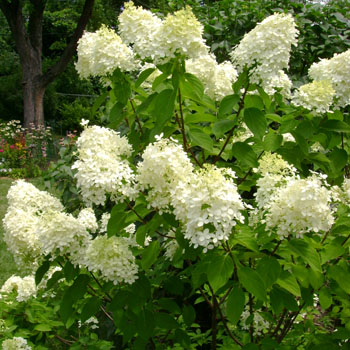 The first featured flower in this series is not a flower at all. It’s a shrub! Limelight Hydrangeas are a miracle. Seriously, if you don’t have one, buy one. Now. I’ll wait. This sturdy upright shrub (it can reach 6 feet tall, but you can trim it to your liking) is covered in huge fluffy flower cones beginning in mid-July. They start out a bright greenish white which slowly turns to all white, then as summer wanes, they become a lovely pink/bronze color. And unlike other, fussier hydrangeas, these are reliable bloomers year on year with no intervention or soil additives needed. Nothing is more spectacular in mid to late summer. I have several Limelights in my yard and will like plant several more in years to come.
Posted in Uncategorized | Leave a Comment »
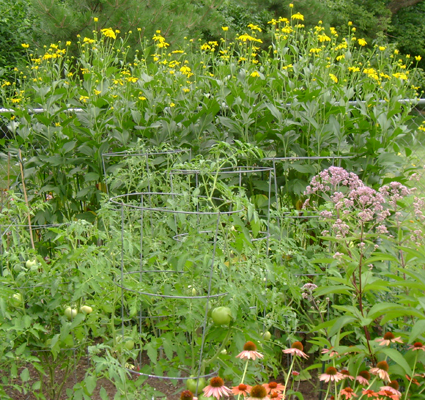
I like having tall flowers behind my veggie garden. So of course I initially turned to traditional sunflowers. But they turned against me. Literally. The flowers faced south, which means they were pointing AWAY from my yard. Yep, I got to look at the backs of the sunflowers. Not that pretty. Plus, they flopped and then got covered in ants. Yuck! Then I found a much better sunflower. It’s a perennial called “Shining Coneflower” (specifically, Rudbeckia hybrid “Herbstsonne”). It reaches nearly 6-feet tall and is covered in yellow flowers from mid-July well into August. And after that, the birds will love to eat the seeds in the cones. If you want height, dependability, and outstanding color, this can’t be beat. I have three plants in a row (as shown in the photo) and they form a wall about 6-feet wide. They definitely make an impressive group.
Posted in Uncategorized | Leave a Comment »
 I know, I know. “Swamp Milkweed” is no way to name a perfectly lovely plant. You can call it “Asclepias incarnata” if you prefer. This robust native plant has nothing but good things going for it. It’s a host plant for Monarch Butterfly caterpillars; butterflies in general love it; it’s not picky about soil or moisture; it’s 4-feet tall and sturdy (no flopping); it’s disease resistant; and best of all, it gives long-lasting, sweet-smelling pink flowers in the height of summer. This plant is tough to find in the store, but mid to late summer is a good time to look for it.
Posted in Uncategorized | Leave a Comment »
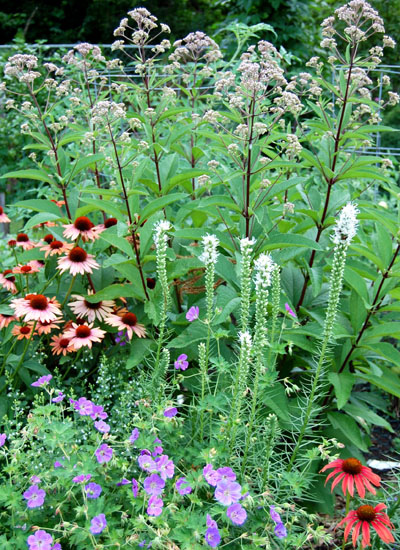 That’s right. I said Joe Pye Weed. Kind of an ugly name for a pretty plant, right? So let’s agree to call it Eupatorium. This native plant has gotten the star treatment from horticulturists lately who have given us gardeners choices other than the traditional 6-foot-high Joe Pye Weed. The plant shown in the photo is a hybrid called “Phantom” that only reaches 3 to 4 feet high. Perfect for most home gardens. I use mine to help screen my vegetable garden. The pale pink flower heads are just starting to bloom now, so they are great for a midsummer boost. I find the dark red stems especially striking against the lighter green leaves. Plus, this is a sturdy plant that does not flop. Just what I need to weather the storms of July in Chicago!
Posted in Uncategorized | Leave a Comment »
 Cait's Garden