Shrubs that Put On a Show

goldenbarborangebarb

The leaves vacated most of my shrubs recently. The last amazing survivors were my barberry shrubs. I have always been aware of barberries. For a long time, the only choice gardeners had was the Crimson variety (or the dwarf Crimson Pygmy) that had a very distinct round shape and a very dark red color. They are great shrubs, but we took them for granted. In the past decade, though, especially the past 5 years, the market has exploded with new varieties of barberries in new colors and shapes. Even very tiny dwarf varieties.

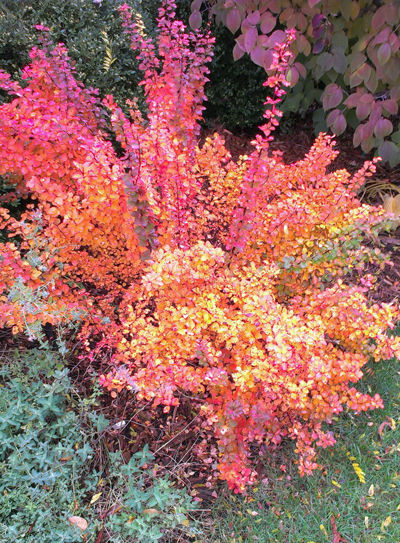
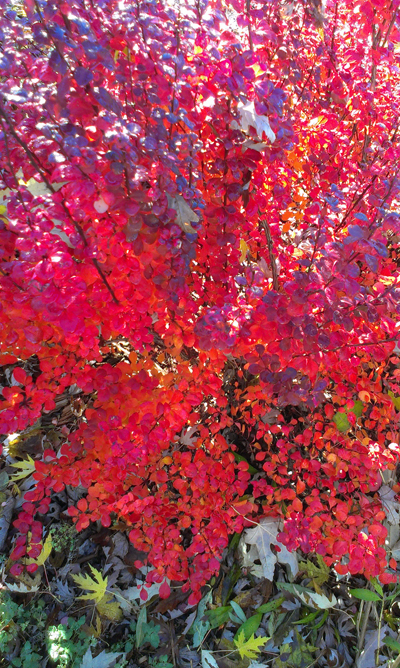
I have two types of barberries in my yard that I have become so enamored with that I am plotting ways to alter my landscape to include more of them. Gold Pillar (seen above on the left) and Orange Rocket (see above on the right). Both are bred to grow tall and skinny rather than round, making them more versatile for use in the landscape. I’ve found neither grows in the promised column shape…they are more vase-shaped or fan shaped…but they definitely have more height than width. Gold Pillar is usually a bright yellow leaf, and Orange Rocket varies in shade between orange and red.

In the autumn, both of these varieties put on an amazing color show. The Gold Pillar turns into a bright ball of multi-colored flame and the Orange Rocket looks like glowing hot red lava. They are spectacular and their leaves hang on long past those of any other deciduous shrub. In fact, it’s the fall color that sealed the deal for my love of these shrubs. During the winter downtime, I highly recommend you also figure out a place to add these shrubs to your garden. They will provide 3 seasons of  amazing, carefree color.
Carpet of Snow

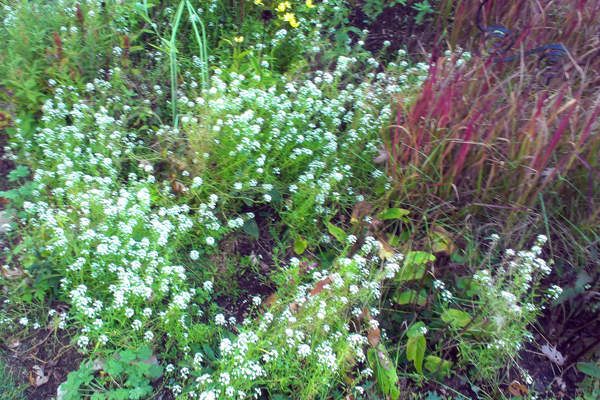
No, I’m not talking about the actual weather event known as snow (although it’s late October and a few flurries have already been sighted). I am talking about a kind of alyssum called “Carpet of Snow.” Normally, I would have nothing of note to say about an annual, especially one as common as alyssum. However, I’ve stumbled upon a strange phenomenon in my yard. A few years ago, I decided to grow alyssum from seed. I chose both white (Carpet of Snow) and a purple mix. The white did very well, the purple not so much, so the following year, I bought another packet of white alyssum, which again did just great all season long. The third year, I got lazy and decided not to bother planting any alyssum seeds. To my surprise, by the time summer got underway, I found I did indeed still have white alyssum. In fact, I had plenty of it, creeping through the bed, blooming in a very airy and delightful fashion. Somehow, this annual has learned to survive winter (through seeds, I imagine). Once again this year, I did not purchase alyssum and once again, I had plenty of it. So much that I moved some plants to other beds and pulled many out. (They are very shallow-rooted little plants, no trouble at all to get rid of where unwanted.)

Some would find these plants intrusive, but I look at them as natural fillers. There are always times when one perennial or another is going through an unfortunate phase, usually just after blooming. When that happens, the unattractive plant is hidden by a cloud of alyssum. Or should I say, a “Carpet of Snow.” Even as the first frosts of the year begin to touch my yard, my alyssum are still going strong and smelling sweet. Best packet of seeds I ever bought!

alyssum

Entrance Exam

cornerlime
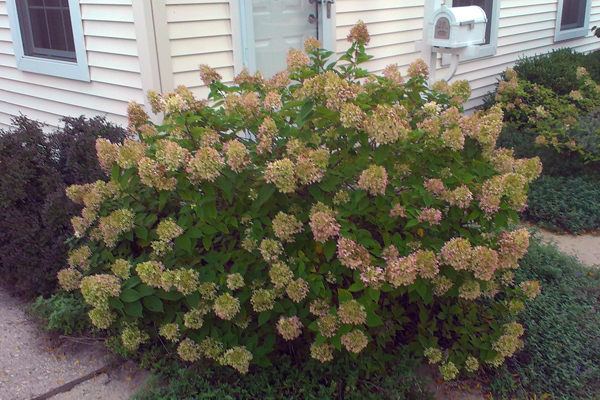
I confess, I don’t spend a lot of gardening time on my front yard. I prefer to keep it simple, with lots of shrubs accented by never-fail perennials, like catmint. While my backyard can get wild and raggedy by season’s end, the front keeps its neatness and curb appeal. One of the best anchors of my front yard display is this Limelight Hydrangea, lording over the awkward little square of dirt between the front door and the driveway. It gets the perfect amount of sun and water (from the gutters) to thrive. And even now, I have a stunning display of flowers. Sometimes, when you get it right, you really get it right.

Plant of the Day: Plumbago

Plumbago
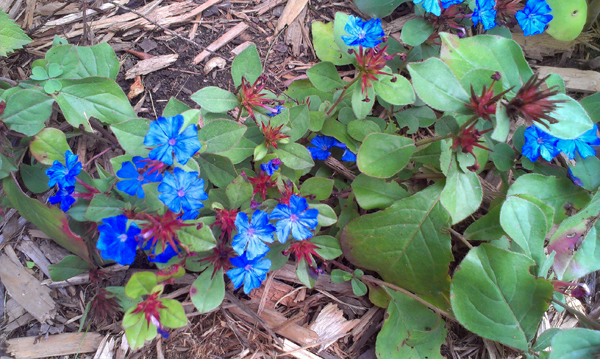
This humble ground cover has slowly crept into my heart this year.  Plumbago, aka leadwort, is a perennial ground cover that reaches 10-12 inches in spread. It does well in sun to part-shade, although I’ve found it excels in part-shade. And it seems fairly drought-tolerant. The flowers are that exquisite shade of pure blue that sort of glows. It is the kind of blue one usually doesn’t find in a hardy Zone 5 perennial. And as a bonus, once the blue petals are gone, you are left with neat-looking little tufts of red that last for a long time. (I believe this red tufty part is called the “sepal” of the plant, but as I am a gardener, not a botanist, I can’t be positive.)

Plumbago is often referred to as a fall season perennial because it blooms until frost and because the leaves turn a bright red in fall. However, I’ve found that the blue flowers start in midsummer and just keep going until frost. The production is truly outstanding. One caveat, though. This plant is slow to awaken in the spring and slow to take off when you plant it new. It pays to begin with a good-sized plant from the garden center.

I started out slowly with this plant, trying just one plant last year and planting two more this year. Now that I’ve gotten to see how fabulous it is, I will be purchasing more of these showstoppers next year. Plumbago/leadwort is a plant saddled with not one, but two unattractive names, but the flowers are gorgeous enough to overcome anything.

Bright Star

image

Sedum is an important part of any garden that strives for year-round color. The slightly succulent leaves look fresh and neat all year. Then come late August and September, the real show begins. The tight clusters of star-shaped flowers hold their color for weeks, and then remain looking good when dried for winter interest.

My favorite sedum by far is called “Neon.” As you can see from the photo, it lives up to its name with vivid purple flowers on bright green stems. It is compact (no flopping) and lights up any corner of the garden. Brilliant!

Sky Blue

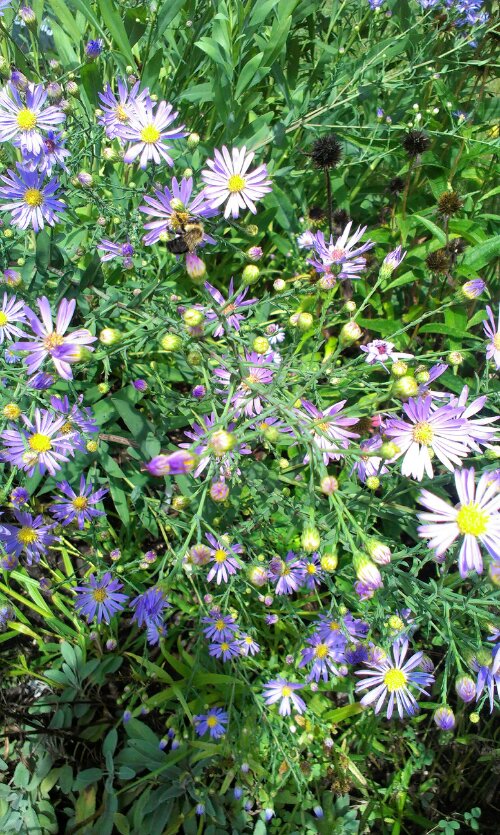
imageAsters are a September staple, but the usual short varieties can easily become riddled with powdery mildew before the flowers even open. Over the years, I’ve lost so many asters to mildew that I had given up on them. Then I found Sky Blue Aster in the native plants section at the nursery. After just two seasons, the pathetic little stem I brought home became a big, tall clump of blue-green leaves covered in sprays of periwinkle blue flowers. To my surprise, it has reproduced a few plants through what appears to be random seeding. I love when that happens! The 3-4 foot stems do tend to flop, but I am happy to report a fantastic resistance to mildew. Once again, a native plant comes to the rescue!

True Petunia Tales

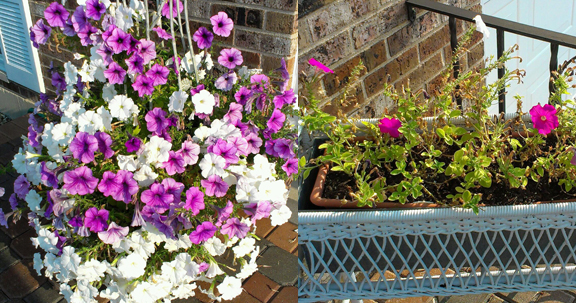
I do not have the patience for annuals. I prefer to spend my gardening dollars on plants that will last for many seasons to come. However, I am aware of the popularity of “Wave” petunias, and have often wondered if they are really worth the extra money being charged for them. Well, this photo from a family member’s front porch appears to demonstrate, quite strongly, that Wave petunias ARE worth the extra money. On the left are the Wave petunias; on the right are the “regular” old petunias. These planters are located within feet of each other on the front porch, in the same light. Both groups of flowers were planted early in the summer, within a week of each other. If that is what Wave petunias look like in late August, then friends, buy Wave petunias if you are inclined to annuals!

wavecomparison

A Little Wild

wildflowers
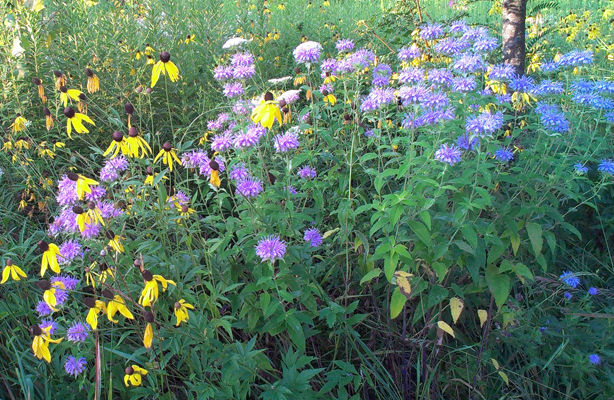
When looking for perennials that will thrive in tough situations (and Chicago weather qualifies for that every season), look no further than your local field, prairie, pond, or wildlife sanctuary. The best perennials for your zone usually have wild relatives thriving in these natural settings. In the photo above, taken at my local pond this week, you can clearly see the black-eyed susans and the bee balm are thriving in gold and purple. They often differ from their tamed and hybridized backyard cousins in one very distinct way…they are much taller. Additionally, you will sometimes notice that the wild versions of our favorite flowers have much smaller or finer flowers. One example of that phenomenon is wild liatris, which is much taller with noticeably more delicate flowers. In the wild, lots of a plant’s energy is spent on growing super long roots for the water and super tall stems to compete for the sun and the pollinators. Huge flowers are not always the end all be all.
ironWhile the hybridized backyard plants offer more variety in color and size, I do think occasionally the perfecting of the growth habit breeds out a little of the hardiness and disease resistance. Backyard bee balm is sometimes more likely to get powdery mildew, for example, than monarda in the wild. Some plants, though, look remarkably similar, whether found in field or garden. One example is Ironweed, which is a relatively new addition to my backyard. As seen in the photo at left, it is about 4 feet of green topped with tiny little fuzzy clumps of remarkably bright purple flowers. Are the flowers worth the wait (it blooms in August) and all that room it takes up? Maybe, maybe not, but I’m still happy to have it because its wildness and impracticality (at least in terms of a traditional garden) amuse me. 

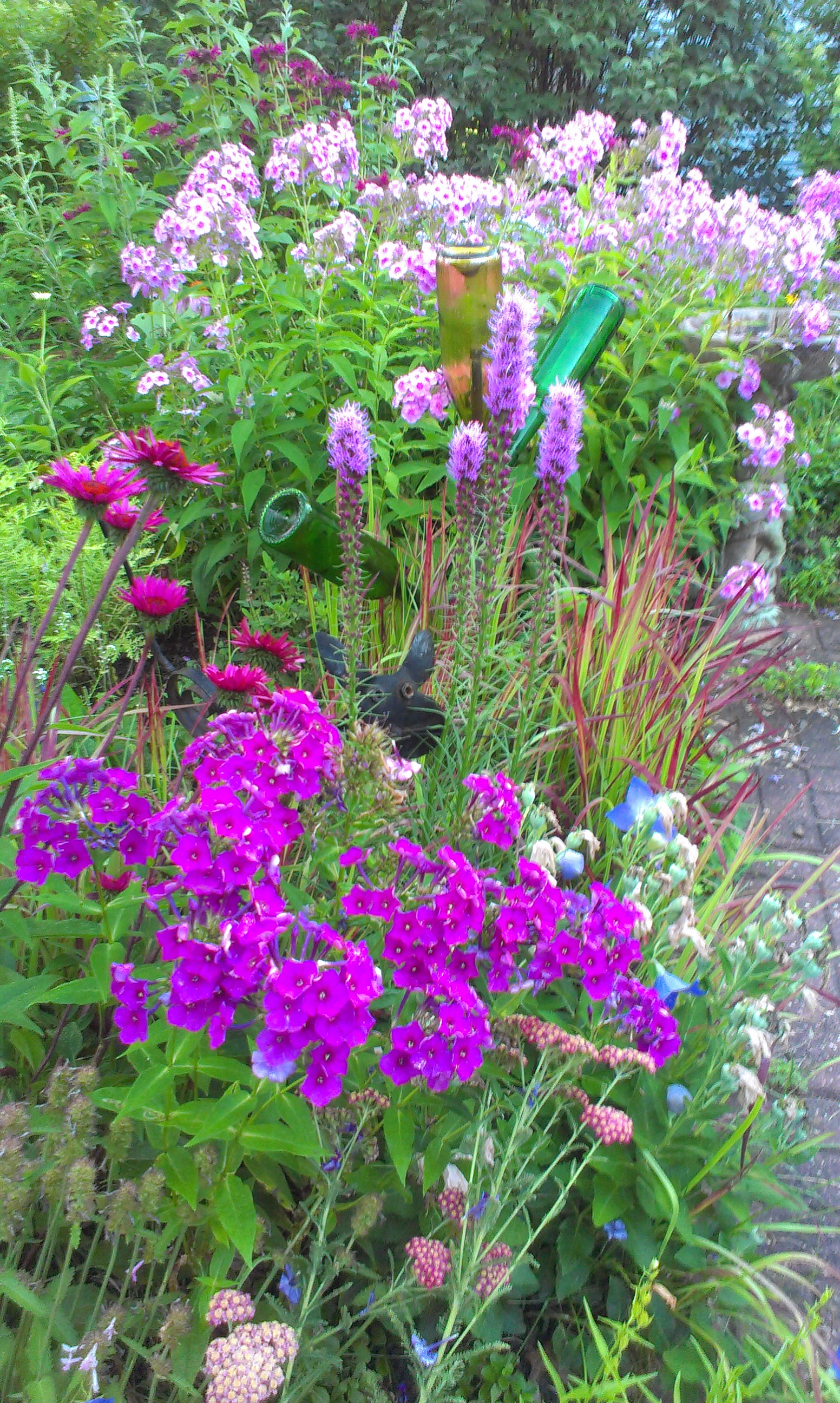
midsummerThere are many staples of the Zone 5 garden for midsummer beauty, but perhaps none are more stunning when combined than Phlox, Coneflower, and Liatris (aka Blazing Star, aka Gayfeather…because it’s just that awesome of a flower to have three names!). Whatever your color combo of choice, this trio of winners will combine to make a stunning display of color and interesting textures in the hottest part of the summer. They are also reliable performers year after year. A few caveats…”disease-resistant” phlox often aren’t, so don’t go by what the label promises. Experiment for yourself, and be proactive with anti-fungals if you see a problem. Also, the new hybrid coneflowers sometimes do not perform as well year-on-year as the old-fashioned pink and purple. And finally, I’ve found that purple liatris is much sturdier than white liatris, which tends to flop. But whatever your color palette, you are sure to be pleased with the results when you plant this threesome in your garden.

Into the Wild

trumpet

A little bit of tropical rainforest mystique accompanies a trumpet vine, even in the Midwest. Campsis radicans (trumpet vine or trumpet creeper) is a hardy perennial and an old-fashioned garden staple that has sometimes fallen out of favor due to its tremendous size and its tendency to spawn many seedlings. It requires strong, tall support and some housekeeping every year. Still, if you have the room and the patience to tame this wild beast, er, vine, you will marvel at its exotic orange trumpet-shaped flowers in midsummer. The hummingbirds will thank you, too.