 There’s not much to say about this photo except yes, the flower really is that bright. I had difficulty capturing this flower’s in-your-face, glowing, neon red-orange, “I can’t believe it’s that fiery” color on my camera until I got this glamour shot in the fading light. This coneflower will seriously rock your garden world. It’s tall, robust, and the color makes it worth every penny of the exorbitant prices you will probably pay for this newer hybrid at the garden center. This plant will make people who care nothing for gardening ask you what that flower is. There are many coneflower hybrids to choose from, and many are nice, but not all live up to their billing. This one does and then some.
Posted in Uncategorized | Leave a Comment »
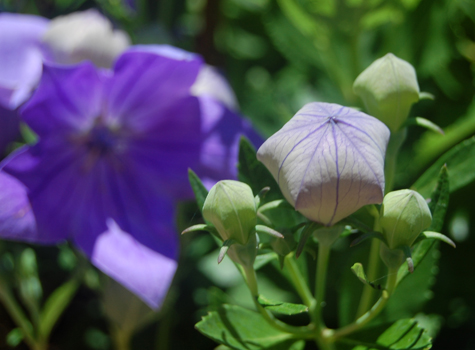
I love Balloon Flowers, especially the more compact varieties, which look like little balloon bouquets. This is a rare flower in which the bud is just as cool as the flower, as it really does look like a miniature hot air balloon about to explode. And when the balloon does pop, the flower is outstanding. It’s a fun plant to own. And it requires little care, being quite drought-tolerant. While the taller varieties can get kind of leggy and need either staking or the support of other tall plants, the traditional varieties are quite sturdy little plants with attractive, non-floppy foliage. Party time is the month of July for this charmer.
Posted in Uncategorized | Leave a Comment »
 Helenium, also called “Helen’s Flower,” was named after the famed Helen of Troy. I’m not sure an orange and red prairie flower qualifies for that refined a moniker. This is kind of a silly looking plant that gets about 3 feet high and is just a touch floppy. This particular variety, “Moerheim Beauty,” is more freestanding that other heleniums, which need staking. Indeed, it is standing up on its own thus far, but I also have it propped against other tall and robust flowers. I’ve only had this plant for two summers and I am quite impressed with its performance so far. It seems impervious to our weird weather conditions and the color is outstanding. The flowers are small, but intense orange and red. They have been blooming for about a week now, which is odd, because they shouldn’ t be blooming until late July. Apparently, our weather at present is mimicking August. Oh well, I’m enjoying them now.
Posted in Uncategorized | Leave a Comment »

I feel pretty good about myself as a flower gardener. Perhaps “Flower Goddess” is a bit of an exaggeration, but on good days, I do feel that way. Give me perennials and I can make something beautiful happen. But vegetables, ah, vegetables. They are a mystery to me. Unlike my perennials of choice, they are not indifferent to weather and watering. They are, like farmers’ crops throughout time, susceptible to the slightest weather issues. You have to baby them, give them regular water, monitor for bugs and blight. And after all that, you still might not get a good result. Vegetables are complicated, and I know I am too ignorant of their ways, even after attempting a vegetable patch for many seasons. This year, I have a revamped veggie garden with a partially raised bed to improve drainage. I also planted fewer plants to give things room to breathe and I tried pole beans for the first time. So far, frequent use of organic anti-fungal has kept the dreaded tomato leaf diseases at bay, but the pole beans are showing signs of some sort of leaf infection at their base. So I am picking off the yellow leaves, spraying anti-fungal, and hoping I don’t have an empty bean trellis this year. That’s why I have so many flowers around my vegetable garden perimeter. It’s my way to insure that my vegetable mistakes are blocked from view by my proven winners.
Posted in Uncategorized | Leave a Comment »
 If you were an artist working with paint instead of flowers, you’d appreciate the way these two plants enhance each other in the garden. Orange and purple might make for a too bold painting for inside your house, but in the garden, what a dynamite combination it is. Here we have Stachys Monieri “Hummelo” (also known as Betony) in the foreground and Asclepias Tuberosa (Butterfly Weed) in the background. Both plants are a little exotic. Butterfly Weed is that true, hot, perfect orange and Stachys has those stiff, bottle-brush purple flowers. They are tough, bold plants that thankfully bloom at the same time, although the Butterfly Weed will outlast the Stachys by quite a few weeks. Still, at present, this combo is a garden win for me, the bees, and this blog.
Posted in Uncategorized | Leave a Comment »
 “Knautia macedonia Mars Midget” has a fun name. And it is a very fun plant. If this flower shape looks familiar, you’ll be interested to know this plant is from the “Scabiosa” family. You’ve probably seen its more commonly found cousin “Butterfly Blue” Scabiosa at garden centers everywhere. However, I can’t keep a Butterfly Blue alive for more than two years, whereas I’ve had Mars Midget for 3 years already. This family of flowers, I’ve learned, can be short-lived in hot, humid climates. Which describes a Chicago summer perfectly.
In fact, I thought this plant had perished over the winter, but then it came back. Apparently, there’s also a chance it will self-seed, although I haven’t seen that happen yet. This is an adorable, true-red flower that comes in silly, airy profusion over a neat mound of grayish-green foliage all summer long. They truly do look a bit like flowers from another planet. They like full-sun and are drought-tolerant. I am hoping this one lives a long time. If it doesn’t, I will be tempted to buy a new one anyway, even though it violates my rule against fussy perennials. It’s just that cool of a plant.
Posted in Uncategorized | Leave a Comment »
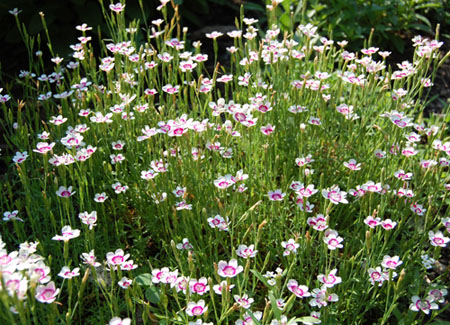 Dianthus, aka Maiden Pinks, aka “Arctic Fire”…I have taken this plant for granted for the past few years because it’s performed so well for so long. What began as a little pot has spread to a clump about 2 feet in diameter. For the first time this year, I’ve tried dividing it, taking little pieces of the shallow-rooted plant to different locations in the garden. So far, so good. While there are many forms of this flower, this particular variety has thrived throughout the year. It even stays remarkably green in winter. And this time of year, the flowers are truly plentiful and spectacular. It’s not often you find such an easy-case perennial to anchor your flower bed.
Posted in Uncategorized | Leave a Comment »
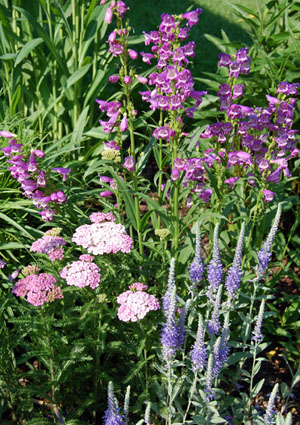 I’d like to say I always plan ahead for good color combinations in the garden. Sometimes, I do. Sometimes, I get lucky, as with these three different purple plants blooming at the same time to form a glorious little combo. Shown in the photo: Penstemon “Prairie Dusk”; Purple Yarrow; and Speedwell (Veronica incana) “Pure Silver.”
Posted in Uncategorized | Leave a Comment »
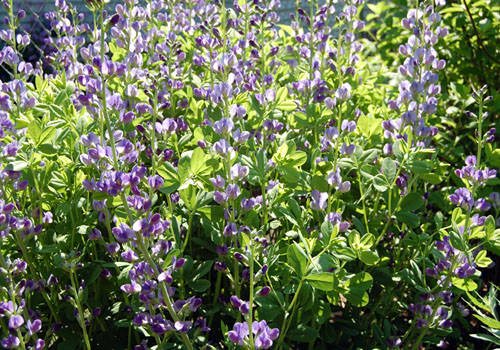
I’ve been a bit remiss on this blog. Summer happens so quickly that this plant’s flowers have been and gone in my yard already. Depending on the weather, this plant will bloom for two to three weeks in late May/early June. It is “Baptisia Australis” otherwise known as Wild or False Indigo. When I purchased this clump shown in the photo, it was in the form of three very tiny seedlings from a mail-order nursery. At that time, about 5 years ago, this plant was hard to find in your local nursery. Today, you’ll see it everywhere, and in more colors, too. (I like the classic indigo color, myself.) My seedlings took three full years to grow to anything worth noting. Then, they really took off…to 3 feet tall and wide! Now you can thankfully buy a much larger plant in the nursery and spare yourself the wait for it to grow.
This plant is a native prairie plant and thus is incredibly strong and resilient to all water conditions. The foliage stays beautiful and upright all season, and in the fall, these really interesting black seedpods form which rattle in the wind. All in all, worth having in the garden, despite the short bloom time. But put it in the back of your beds and give it some room!
Posted in Uncategorized | Leave a Comment »
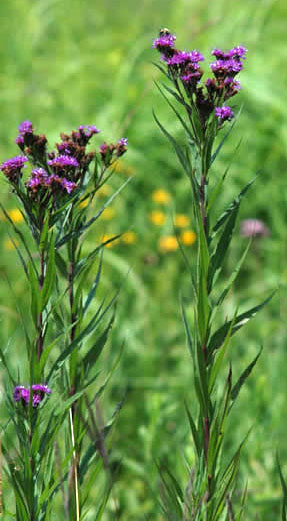 I usually try to use only photos I have taken of my own yard on this blog, but I just purchased this particular plant and I’d like to blog about it before it blooms in about 2 months. The past few years, I have been fascinated by native plants. Fortunately for me, they are showing up more regularly in the stores. You just need to grab them when you see them because supply is very random and sparse. Imagine how pleased I was to see a pot of this plant at a nursery over the weekend. “Vernonia fasciculata”…also called Smooth Ironweed…is a wildflower common to many states, including Illinois, and is a member of the aster family. They grow to be 2 to 4 feet tall and like other asters spread by clumping (so you can share). The flowers are the exciting part. Magenta clusters in late summer that attract bees and butterflies. Exciting! I will be sure to keep you posted on its performance later this summer.
Posted in Uncategorized | Leave a Comment »
 Cait's Garden
