The November Rose

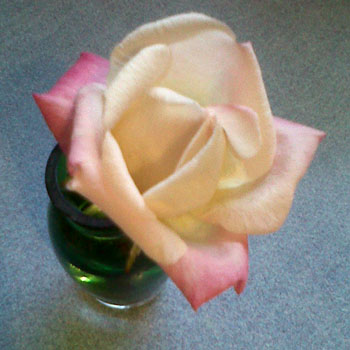
I haven’t posted in a while because when the growing season winds down, I spend less time in the garden (and let’s face it, there is precious little daylight now to see the garden before or after work). But this morning, while out at 6:30AM feeding the birds and squirrels, I picked the last perfect rosebud from my climbing rose. And I was so excited about it (it smells just as sweet as the summer blossoms) that I snapped this photo of it on my kitchen counter. The flowers we took for granted just a couple of months ago are now special and rare surprises. Imagine the frosts this little rose has survived already!

I’ve also been meaning to post about the beauty that is left in the yard this late November day. Most of the showy fall-colored trees are done performing for the year, but there are still plenty of colors to enjoy. The Crimson Pygmy Barberry bush, usually a lovely dark red, is now bright pumpkin orange. The Golden Vicary Privet, usually bright lemon-lime green, is now an amazing eggplant purple tinged with green. And the Purple Smokebush still has its usual red-purple leaves, more visible now that its neighbors in the yard are leafless.

Chicago winters are unpredictable. When it remains mild like this, we can enjoy little pockets of green things in our yards indefinitely, even if it’s just a little foliage here and there. Or one perfect rose on a November morning.
The Winding Down Time

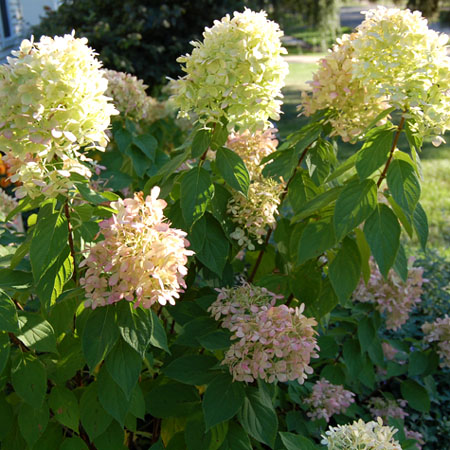
This has been an extra long growing season. No hard frosts yet and it’s almost Halloween! Of course, most plants sort of gave up the ghost in the past few weeks. Looking out at the yard, the only thing still producing flowers like crazy is the Rozanne Cranesbill (buy these flowers…they are AMAZING) and my various Knockout roses. Many other plants have lovely golden foliage as they shut down production for the year. I must give props to my Limelight Hydrangeas. I took the photo shown a couple of weeks ago to capture how the flowers were starting to turn pink. They look much the same now, although the leaves are yellower. Eventually, the flowers will turn bronze for the winter. But just look at how fabulous this shrub is! Huge, blush-pink flowers…in October! I have these shrubs on either side of my front door. It makes for a reliably great entrance.

I don’t know how other gardeners are, but personally, I stop gardening by mid-October. Oh sure, I’ll do a little clean-up, some raking. But mostly, I let everything sit, undisturbed, until Spring. Then I am a cleaning maniac. I learned long ago that plants do best if you leave them their foliage over the winter. It helps protect the plants. The only exception is diseased or mildewed foliage. That I always remove. Otherwise, I just sit back and watch things slowly go to sleep. Even now, I am getting much enjoyment from looking at my yard. Things are winding down, but they are still gorgeous.

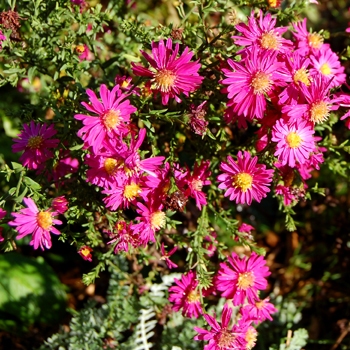
I would be remiss not to mention the perennial I’ve waited the longest to see. We wait so long to see asters it can be easy to ignore them. But no doubt the flowers are welcome when they arrive.

Asters can be found in varying shades of purple, as well as unexpected colors, such as the bright red aster shown in the photo, which is still in full bloom in my yard.

It’s certainly easy to grow asters, and easy to to make more of them by division. The only downside is a tendency to get powdery mildew…something I usually forget until it’s too late and the leaves look horrible. Perhaps next year I will remember to spray them with an antifungal in the middle of summer when the damage is usually done. On the bright side, the flowers are still gorgeous.

One note, rabbits love asters. Some people I know with plentiful wild rabbits have completely given up on growing them. If you are wondering where those asters you planted have gone, look to the bunny in your yard.

Why I Garden

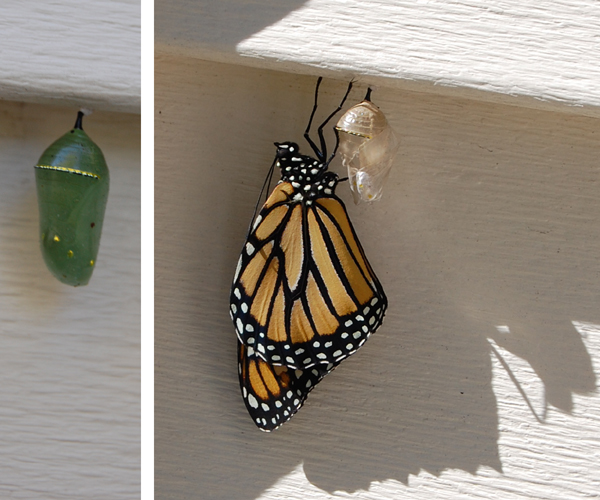
There are many reasons I love to garden. At the heart of it all is that I love nature. It is hugely important to my life. I like to think that gardeners, especially those of us who take pains to use native plants and go chemical free in our yards, are providing sanctuaries for wildlife that would otherwise be fading away in our urban jungles.  Sometimes, the pains we take truly pay off in a tangible way. Case in point, this Monarch Butterfly.

Let me back up. For the past few years, I’ve consciously planted several flowers in the milkweed variety because they are host plants for Monarch larvae. I didn’t see any results, but figured the butterflies would eventually see my yard as a home. Last year I put in this huge plant called a Swamp Milkweed. Apparently, that one was the charm. About 10 days ago, I noticed this beautiful green thimble hanging from the siding on the garage, a few feet away from the milkweed plant. I researched it and discovered it was a Monarch caterpillar in the process of transforming into a butterfly. It was kind of late in the season. October butterflies, if they make it, are the ones who will fly to Mexico to mate. I was worried, with the cold evenings, that this little guy wouldn’t survive. But today, he/she hatched out, and as you can see, is gorgeous. I was beyond thrilled to see it. I hope this is only the first of many butterflies created and nourished in my backyard.

In my own small way, I helped make that butterfly. That is pretty fabulous. That is why I garden.

The Sedum Pay-off

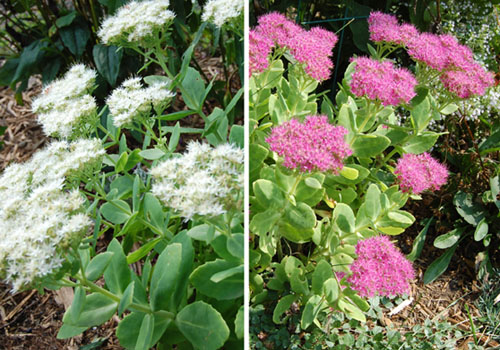
Sedum is a perennial that is often overlooked or taken for granted. When the other flowers are blooming like crazy in the spring and summer, the sedum just waits. It has attractive succulent leaves that add interest to the garden, but nothing that makes you say wow. Until now. This time of year, they are definitely a “wow” and prove why they are necessary additions to any garden. There are many varieties to choose from (including groundcovers), but two of my favorites are shown in the photo. The bright purple sedum is called (appropriately) “Neon” and the white one, which is a newer variety, is called “Stardust.” I prefer these two plants because they are short, about a foot high, so they don’t flop like other taller sedums. And the bright, fresh colors are a real knock-out. These are hardy plants to zone 3 so they survive just about anything. But it is recommended that you do not deadhead them until spring. Since they offer such nice winter interest, I wouldn’t want to anyway.

Plant of the Day: Boltonia!

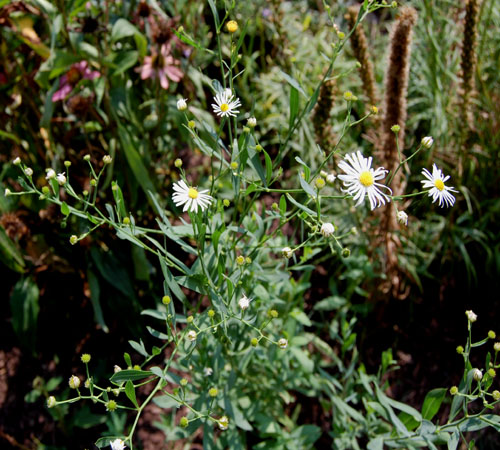
Boltonia asteroides “Snowbank” to be precise! Never heard of it? Neither had I until this past July when I saw it at the garden center. But this plant has some history. It’s an American wildflower! Nicknames for it are White Doll’s Daisy and Wild Aster. It definitely has the qualities of both an aster and a daisy. It is also sometimes called Starflower. The clump shown in the photo isn’t all that impressive because I planted it only a couple of months ago. It just started blooming for me in mid-September. At full-strength, this plant should get up to 4 feet tall and 3 feet wide. This will be something else to look forward to on the cusp of fall when many of my other flowers are waning.

(Not so) Obedient Plant

We gardeners love to make jokes about this flower, because the name is so at odds with its behavior in the garden. I’m told it was named this way because the flower stems are easy to bend and work with in flower arranging, which may be true. I’m not one for bringing cut flowers indoors so I haven’t tried it myself. What I do know is that it is very easy to make more Obedient Plants. Just wait a year or two and the clump will be big enough to divide. Which is actually kind of nice. I love flowers that make more of themselves, and as this is clump-forming, it’s easy to control. This bushy, robust plant is 2-3 feet tall, hardy to Zone 3, and starts blooming in late August/September. Its flowers are most commonly found in purple, but there are white and pink varieties out there. It’s one of those plants that you don’t truly appreciate until September, and then you are very glad you have it. And if you don’t have it, seriously, just ask another gardener. I would bet money they have a clump to spare. There is no need to ever buy an Obedient Plant!

Sweet Autumn Clematis

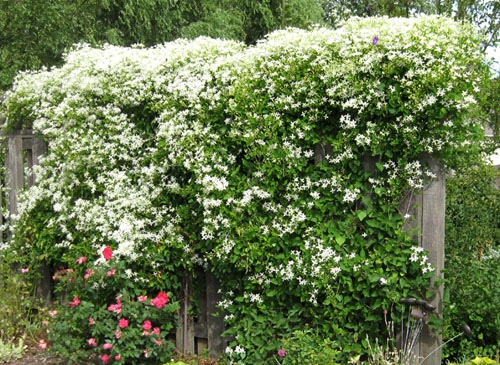
Sweet Autumn Clematis is one of the few things we Zone 5 gardeners have to look forward to in September. This vine doesn’t start blooming until late August and continues until a hard frost. As you can see, the tiny, star-like white flowers form clouds all over the vine. And the flowers, as the name would imply, have a sweet, honeysuckle scent. This vine does well in sun or part-shade and tolerates all sorts of growing conditions. To keep it full, trim in the spring. One note, this vine propagates by seed, so you do end up getting many little baby vines starting up every year. But I think the risk is worth it. And in the interest of full disclosure, the photo above was taken in my mother’s yard. I have recently started growing my own vine (from a seedling from her yard) and it is not yet ready for its close-up. However, I look forward to hiding more of my unattractive chain link fence with this helpful vine next season.

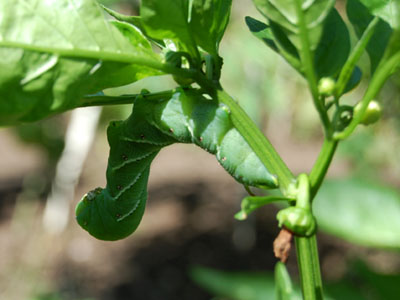
Hmm… Nope, nothing but leaves… But wait, what the… Aha!

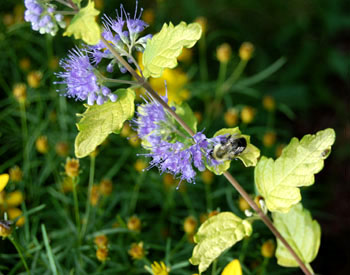
I’ve talked a great deal about finding those late summer gems that give us something to look forward to when all our other plants have given up for the season. I’ve saved one of my favorites until now, because it is only just opening now. The proper name for this shrub is Caryopteris, but it is commonly known as the Blue Mist or Bluebeard shrub. Most commonly found with a delicate, silvery green leaf, this medium-sized shrub gives deep periwinkle blue flowers in late August through September. I fell in love with this shrub due to its nickname, Blue Mist, which I found highly romantic. I adore the color of the flowers, too. (Periwinkle was my favorite crayon as a child.) Recently, a cultivar called “Sunshine Blue” [shown here] was released. I bought my little twig through Bluestone Perennials mail-order a couple of years ago (although it can now be found in garden centers) and it is now a robust 4-foot round shrub. Sunshine Blue boasts bright lemon-green leaves all season long, which give it great appeal even when it isn’t blooming…which, let’s face it, is most of the season! Original Blue Mists are nice too, with their silvery leaves. I have a common variety called “Dark Knight” which is gorgeous. It depends on your foliage color needs in a particular spot. Blue Mists can be fussy after a harsh winter, although I’ve found that to be true more often with the original silvery-hued leaf versions, like Dark Knight, than with Sunshine Blue. It is not uncommon to have to clip back a few dead branches in Spring. This shrub, like Buddleia, is also very late to leaf out in the spring, so be patient and wait to trim until it’s been leafing out for a while. If you get a Blue Mist in a spot it likes, you can expect years of enjoyment. They seem to like a spot not too wet and not too dry, with full sun and some winter wind protection. Just don’t pick a spot too near your walkway as the bees LOVE this plant even more than I do.